profilora.com – Leonardo da Vinci Biography reveals the life of a true genius. Known for his works in art and science, Leonardo exemplifies the Renaissance spirit. His curiosity and innovative thinking led to groundbreaking contributions that still impact us today. In this article, we will explore the extraordinary mind behind art and innovation, focusing on his life, achievements, and lasting legacy.
Leonardo’s Early Life and Education
Leonardo da Vinci was born on April 15, 1452, in Vinci, Italy. He was the illegitimate son of a notary, Ser Piero, and a peasant woman. Growing up in a rural environment, Leonardo displayed artistic talent early on. At the age of 14, he became an apprentice to Andrea del Verrocchio, a prominent Florentine painter and sculptor.
During his apprenticeship, Leonardo learned various skills, including painting, sculpting, and mechanical arts. His exposure to different techniques and ideas shaped his unique perspective. Moreover, he developed a keen interest in anatomy, engineering, and nature. These interests would later influence his artwork and inventions.
In the early years, he focused on mastering the fundamentals of art. However, his insatiable curiosity drove him to explore beyond traditional boundaries. As a result, Leonardo became a polymath, excelling in multiple disciplines. This early foundation laid the groundwork for his future masterpieces and innovations.
Major Works and Contributions
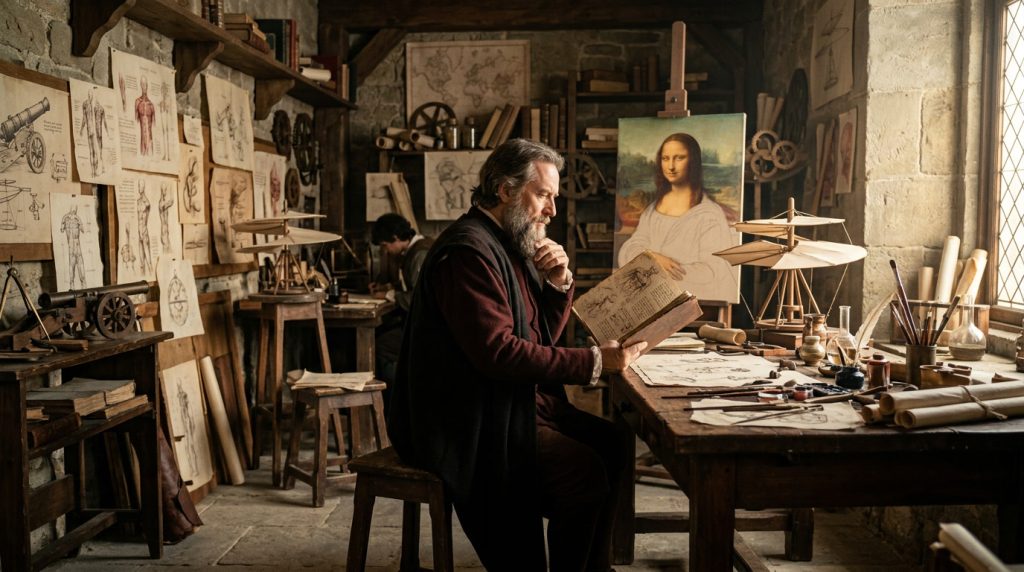
Leonardo da Vinci’s contributions to art are monumental. Among his most famous works are the “Mona Lisa” and “The Last Supper.” The “Mona Lisa” is renowned for its enigmatic smile and masterful use of sfumato. This technique creates a soft transition between colors, enhancing the painting’s depth.
“The Last Supper,” on the other hand, captures the moment Jesus announces his betrayal. This mural, painted in the late 15th century, showcases Leonardo’s understanding of perspective and composition. His innovative approach to storytelling through art set new standards in the field.
Aside from painting, Leonardo made significant strides in science and engineering. He sketched designs for flying machines, tanks, and various inventions. His notebooks reveal a mind that constantly sought to understand the world. Moreover, his studies in anatomy led to accurate depictions of the human body, influencing future artists and scientists.
Tips/Insight
To appreciate Leonardo da Vinci’s genius, consider studying his works in depth. Analyze the techniques he employed and the themes he explored. Furthermore, explore his notebooks to gain insight into his thought process. Engaging with his art and ideas can inspire creativity and innovation in your own life.
Additionally, reflect on how Leonardo balanced art and science. – His ability to merge these disciplines exemplifies the importance of interdisciplinary thinking. Embracing curiosity and exploration can lead to breakthroughs in various fields. By following his example, you can cultivate a mindset of continuous learning and discovery.
Conclusion
Leonardo da Vinci Biography encapsulates the life of a remarkable individual. His contributions to art and science remain influential today. By understanding his journey, we can appreciate the depth of his genius. Emulating Leonardo’s curiosity and innovative spirit can inspire future generations to create and explore.