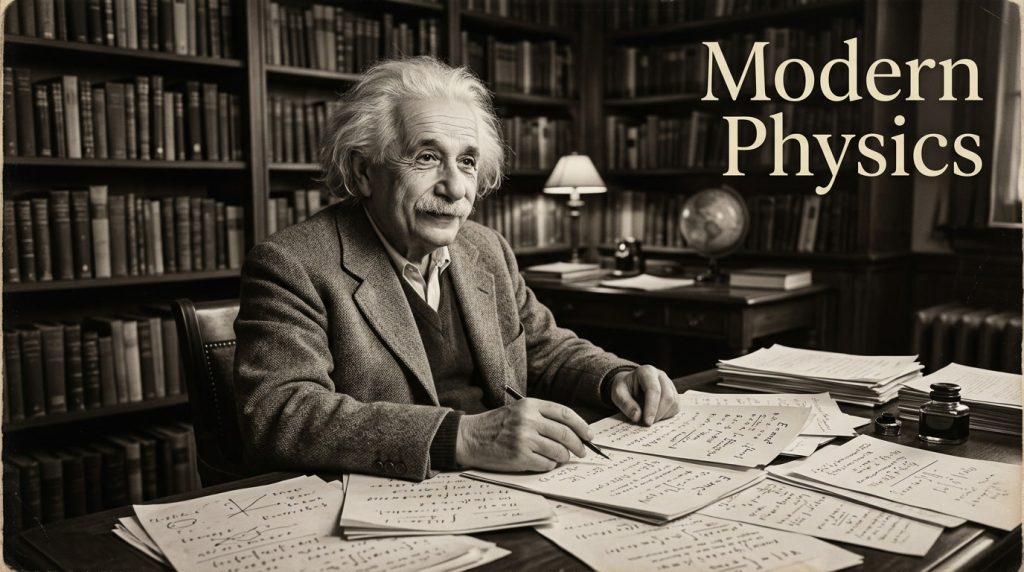
profilora.com – Albert Einstein biography reveals a remarkable journey of a brilliant mind. His theories revolutionized science and changed how we perceive the universe. From his early years to groundbreaking theories, Einstein’s life is a testament to creativity and intellect. He is widely known for his theory of relativity, which reshaped physics and our understanding of time and space. This article explores the extraordinary genius of Albert Einstein and his lasting impact on science and beyond.
Early Life and Education
Born on March 14, 1879, in Ulm, Germany, Albert Einstein showed signs of brilliance from a young age. His family moved to Munich, where he attended school. However, he struggled with the rigid educational system. Despite this, he excelled in mathematics and physics. At the age of 16, he passed the entrance exam for the Polytechnic Institute in Zurich. He later graduated in 1900 with a degree in physics.
During his time at the Polytechnic Institute, Einstein developed a passion for theoretical physics. He was influenced by the works of physicists like Isaac Newton and James Clerk Maxwell. After graduation, he found it challenging to secure a teaching position. Instead, he accepted a job at the Swiss Patent Office. This position allowed him to ponder scientific theories while reviewing patent applications.
Groundbreaking Theories
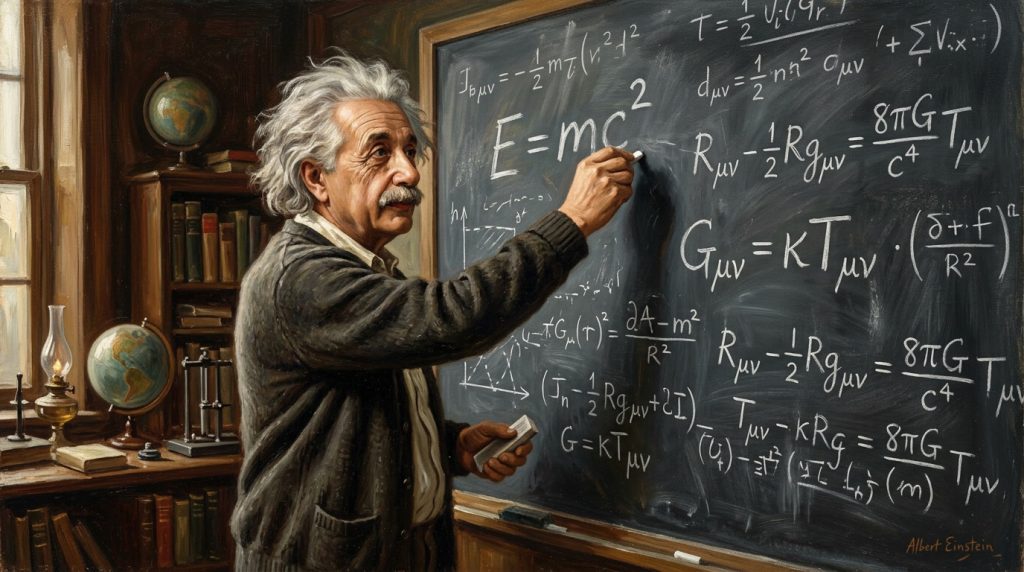
Einstein’s most famous contributions include the theory of relativity and the photoelectric effect. In 1905, he published four groundbreaking papers. One of these papers introduced the special theory of relativity. This theory proposed that the laws of physics are the same for all non-accelerating observers. It also established that the speed of light is constant, regardless of the observer’s motion.
In 1915, Einstein expanded his ideas with the general theory of relativity. This theory described gravity as a curvature of space-time caused by mass. It fundamentally changed the understanding of gravitational force. Moreover, his work on the photoelectric effect earned him the Nobel Prize in Physics in 1921. This phenomenon demonstrated that light can behave as both a wave and a particle.
Tips/Insight
Understanding Einstein’s theories requires open-mindedness and curiosity. Start by exploring his major works to grasp his contributions fully. Engage with visual aids, such as diagrams and videos, to visualize complex concepts. – Additionally, discussing these ideas with others can enhance comprehension. Consider reading biographies that delve deeper into Einstein’s life and thought processes. These resources can provide valuable insights into his genius and its implications for modern science.
Conclusion
Albert Einstein’s biography is a remarkable tale of intellect and innovation. His theories transformed our understanding of the universe forever. From relativity to the photoelectric effect, his contributions laid the foundation for modern physics. By studying his life and work, we gain insights into the nature of creativity and scientific inquiry. This legacy continues to inspire future generations of scientists and thinkers.