He built an empire out of cardboard boxes and code.
Jeffrey Preston Bezos, once a quiet computer engineer from Albuquerque, reshaped how the world buys, reads, and dreams of the future.
From his humble garage in Seattle to launching rockets through the edge of space, Bezos has become a living symbol of how imagination, obsession, and endurance can redraw the map of modern capitalism.
From Albuquerque to Ambition
Jeff Bezos was born on January 12, 1964, in Albuquerque, New Mexico, to Jacklyn Gise Jorgensen and Ted Jorgensen. His mother was a teenager at the time, and his parents divorced shortly after his birth. When she later married Miguel “Mike” Bezos, a Cuban immigrant who adopted Jeff as his own son, the boy gained not only a new name but also a story of reinvention — a theme that would echo through his life.
Growing up in Houston, Texas, and later Miami, Bezos showed early signs of curiosity and precision. He built electric alarms to keep his siblings out of his room, tinkered with science projects, and devoured books on space and computers.
He graduated as valedictorian from Miami Palmetto Senior High School before studying electrical engineering and computer science at Princeton University, where he graduated summa cum laude in 1986. His professors described him as “a visionary disguised as a technician.”
The Leap: From Wall Street to a Garage in Seattle
After college, Bezos worked on Wall Street for firms like Fitel, Bankers Trust, and D.E. Shaw & Co. — where he became the company’s youngest senior vice president at 26.
In 1994, while researching investment opportunities on the emerging World Wide Web, Bezos came across a staggering fact: internet usage was growing 2,300% per year.
He realized that the internet would become the next great marketplace.
So he did what few would dare — he left his stable, high-paying job, packed his car with boxes, and drove from New York to Seattle with his wife MacKenzie Scott to start an online bookstore called Amazon.com.
In his garage, with a hand-drawn business plan and a dream of universal selection, Bezos began shipping books across America. “Our vision,” he said, “is to build the world’s most customer-centric company.”
By 1997, Amazon went public; by 1999, Bezos was Time Magazine’s Person of the Year.
But behind the laughter and late-night coding sessions lay a relentless philosophy: long-term thinking over short-term gain.
Building the Empire: Beyond Books
Bezos didn’t see Amazon as a bookstore — he saw it as a blueprint for everything.
By the early 2000s, he expanded into music, electronics, and cloud computing. The launch of Amazon Web Services (AWS) in 2006 quietly became one of the most profitable revolutions in tech history, powering the modern internet backbone.
Under his leadership, Amazon became the largest online retailer in the world, and AWS evolved into a trillion-dollar business pillar. Products like Kindle (2007), Alexa (2014), and Prime Video further transformed entertainment and technology.
His management philosophy, described as “ruthlessly efficient but relentlessly inventive,” was both admired and feared. He introduced “two-pizza teams” — small, agile groups designed to move fast — and encouraged a culture of constant experimentation, even if it meant failure.
As he once wrote in a shareholder letter:
“Failure and invention are inseparable twins. To invent, you have to experiment — and if you know in advance that it’s going to work, it’s not an experiment.”
Blue Origins and Beyond Earth
Even as Amazon conquered commerce, Bezos was looking skyward.
In 2000, he founded Blue Origin, a private aerospace company focused on “building a future where millions of people live and work in space.”
Unlike Elon Musk’s SpaceX, Bezos emphasized slow, sustainable progress — his company’s motto: “Gradatim Ferociter” (Step by step, ferociously).
In July 2021, Bezos became the second billionaire to travel to space aboard New Shepard, fulfilling a childhood dream sparked by his love of Star Trek and NASA. The flight was brief — about 10 minutes — but symbolic of his lifelong belief that humanity must expand beyond Earth to survive.
Controversy, Criticism, and Reinvention
Success has never shielded Bezos from scrutiny.
Amazon has faced criticism over warehouse conditions, labor practices, and anti-competitive strategies. Politicians accused the company of monopolistic dominance, while critics pointed to Bezos’s vast wealth as emblematic of inequality in the digital age.
In 2019, he and MacKenzie Scott divorced after 25 years of marriage — one of the largest settlements in history. Yet the separation was amicable; she became one of the world’s most generous philanthropists, while Bezos deepened his focus on climate initiatives and innovation.
In 2021, Bezos stepped down as CEO of Amazon, transitioning to Executive Chairman, handing over leadership to Andy Jassy.
He then launched the Bezos Earth Fund, pledging $10 billion to combat climate change — an attempt to balance the scales between growth and responsibility.
The Man Behind the Machine
Away from boardrooms and rocket hangars, Bezos is a creature of discipline and curiosity.
He wakes up early without an alarm clock, reads deeply, and famously schedules his toughest meetings for before lunch — what he calls his “high-energy window.”
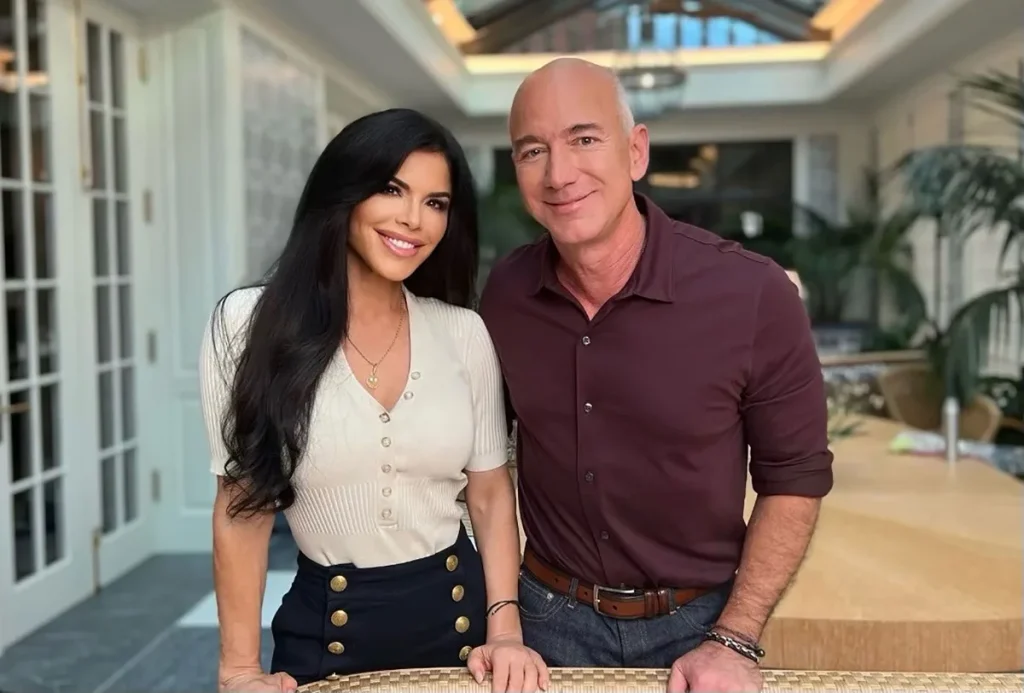
He’s a devoted father and partner to Lauren Sánchez, a journalist and pilot.
His philosophy is simple yet profound:
“We are what we choose to build. Our legacy is written by the risks we take.”
Bezos’s life reflects the paradox of modern innovation — a man both praised for progress and questioned for its cost. Yet his influence on commerce, technology, and even imagination remains unmatched.
A Legacy Written in Code and Courage
Jeff Bezos’s story is more than a corporate saga — it’s a case study in vision and execution.
He transformed a single bookstore into a global ecosystem of logistics, cloud computing, and creativity.
He made patience a strategy and curiosity a currency, inspiring entrepreneurs to think bigger than profits — to build for the long arc of history.
Whether remembered as a builder, disruptor, or explorer, Jeff Bezos redefined what it means to innovate in the 21st century.
His empire may run on algorithms, but its origin was entirely human — a man, a dream, and a garage full of boxes.