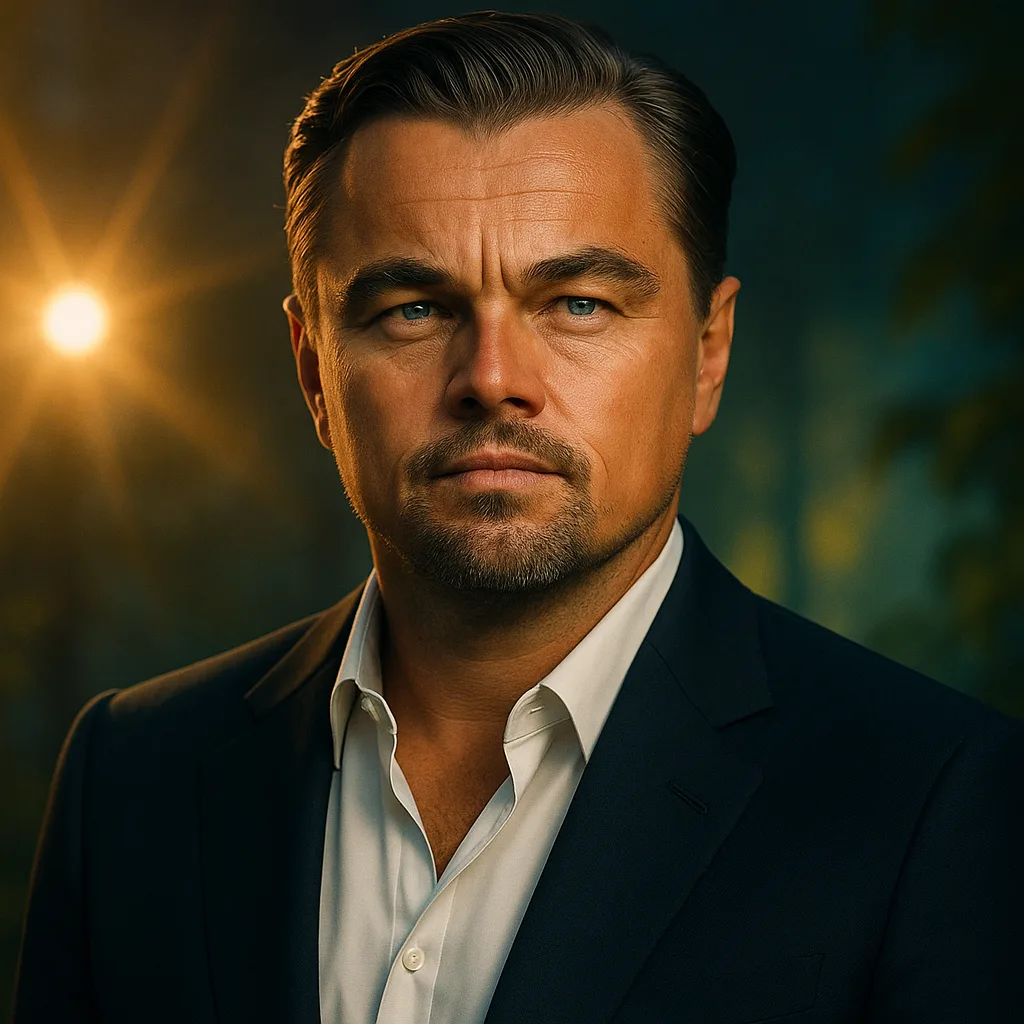
Leonardo Wilhelm DiCaprio was born on November 11, 1974, in Los Angeles, California, U.S. His mother, Irmelin Indenbirken, is of German origin and worked as a legal secretary, while his father, George DiCaprio, is an American underground comic artist and distributor.
Leonardo’s name reportedly came from an anecdote: his mother, visiting the Uffizi Gallery in Florence while pregnant, saw a Leonardo da Vinci painting and felt the baby kick, inspiring the name. He grew up as an only child and spent part of his youth navigating cultural identities—his maternal side of the family has German and possibly Russian roots.
From a young age, DiCaprio showed interest in performing. He appeared in commercials and educational films during his childhood.As a teenager, he attended John Marshall High School and the Center for Enriched Studies in Los Angeles.His early exposure to acting planted the seeds for what would become a prolific film career.
Career of Leonardo DiCaprio
Early Beginnings and Breakthrough (1991–1996)
Leonardo DiCaprio’s first film appearance was in Critters 3 (1991), a low-budget horror movie—he later described it as a role he preferred to forget.That same year, he secured a recurring television role in the sitcom Growing Pains, playing a homeless youth named Luke.
His performance in What’s Eating Gilbert Grape (1993) earned him wide critical acclaim. He played a developmentally disabled younger brother—a role that gained him his first Academy Award nomination (Best Supporting Actor) and a Golden Globe nomination.That role marked a turning point: DiCaprio began to be viewed as a serious actor rather than just a youthful face.
He took roles in The Quick and the Dead (1995), The Basketball Diaries (1995), Romeo + Juliet (1996), expanding his range and public recognition.
Stardom and Major Collaborations (1997–2009)
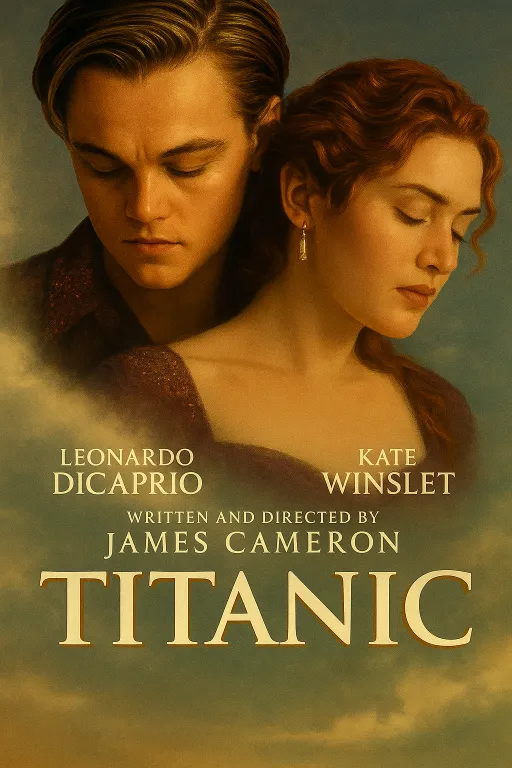
In 1997, DiCaprio starred in Titanic as Jack Dawson. Directed by James Cameron, Titanic became one of the biggest box-office successes ever at the time, earning over $2 billion worldwide and catapulting Leonardo DiCaprio into global superstardom.
Following Titanic, he navigated between commercial and auteur-driven films. In 2002, he starred in Catch Me If You Can under director Steven Spielberg—an intriguing shift to lighter, character-driven material.
In 2004, he founded his production company, Appian Way Productions, to have more influence and creative control over film projects.He and Martin Scorsese collaborated on The Aviator (2004), a biopic about Howard Hughes, which earned him critical praise and a Golden Globe for Best Actor.
He continued to take bold roles: The Departed (2006), Blood Diamond (2006), Revolutionary Road (2008). In Blood Diamond, for example, he immersed himself into accent work and researched in Africa to bring authenticity.
Later Career and Recent Projects (2010–Present)
During the 2010s, DiCaprio continued to be a force in Hollywood. He featured in Shutter Island (2010) and Inception (2010). In 2012, he played Calvin Candie in Django Unchained, a villainous turn that won him praise and a Golden Globe nomination.
In 2015, DiCaprio starred in The Revenant as frontiersman Hugh Glass—a grueling performance involving harsh environments and demanding physical conditions. He won the Academy Award for Best Actor for this role.
After a brief hiatus, he returned in Once Upon a Time in Hollywood (2019), directed by Quentin Tarantino, and more recently in Killers of the Flower Moon (2023) under Scorsese, where DiCaprio chose to play a morally complex role.
In 2025 he starred in One Battle After Another, continuing his pattern of selecting ambitious projects.
Beyond acting, DiCaprio’s production and environmental documentary work have become integral to his career narrative.
Major Achievements and Awards
Leonardo DiCaprio’s filmography is decorated with significant awards and recognition:
- Academy Award: Won Best Actor for The Revenant (2016)
- Multiple Oscar nominations across acting and producing roles
- Golden Globe Awards: At least three — for The Aviator, The Revenant, The Wolf of Wall Street
- BAFTA / SAG Awards: He has also been honored by the British Academy of Film and Television Arts and the Screen Actors Guild, especially for The Revenant.
Commercially, many of his films have grossed hundreds of millions, and his total box office earnings surpass $7 billion globally.
In addition to film awards, DiCaprio has been designated a United Nations Messenger of Peace (with a focus on climate change) in 2014. His philanthropic and environmental work via the Leonardo DiCaprio Foundation has supported over 200 conservation projects worldwide.
Challenges or Controversies
Throughout his career, DiCaprio has faced public scrutiny and challenges, as is common for figures in the spotlight.
- “Party boy” reputation: In the 1990s, he was associated with celebrity circles and nightlife. A 1998 New York Magazine article criticized a male entourage (sometimes dubbed the “Pussy Posse”).
- Age-gap relationships: DiCaprio has frequently been noted in media for dating significantly younger women. This has drawn commentary and critiques over the years.
- Typecasting concerns: Early on, he worried about being stereotyped as a youthful romantic lead, and later had to make deliberate role choices to break out of certain molds.
- Physical and logistical film challenges: For The Revenant, the filming was famously harsh and demanding.
- Occasional criticism of activism: Some critics question celebrity environmentalism and whether it aligns with private behavior. While DiCaprio’s foundation is widely praised, such debates frequently accompany high-profile activists.
In all these, he has generally responded with humility or deflected, focusing instead on his work and causes.
Personal Life, Trivia, and Famous Quotes
Leonardo DiCaprio maintains a relatively private personal life but some details are known:
- Relationships: He dated Brazilian model Gisele Bündchen from 1999 to 2005. Later, he was linked with Bar Refaeli (2005–2011)
- He’s known for being agnostic and rarely discusses religion.
- Quotes:
> “They want you miserable, just like them. They don’t want heroes; what they want is to see you fall.”
> On acting influences: “If I were to pick two [influences], from different generations, it would be De Niro and James Dean.” - Trivia:
• His production company, Appian Way, is named after an ancient Roman road.
• He was nearly advised to change his name early in his career to something more “marketable,” but his father opposed it.
• A recently discovered Himalayan snake species has been named after him in honor of his environmental activism.
What are some of the challenges or controversies Leonardo DiCaprio has faced?
Leonardo DiCaprio has faced challenges such as a
What are some of Leonardo DiCaprio’s major awards?
Leonardo DiCaprio has won an Academy Award for Best Actor for The Revenant, received multiple Golden Globe Awards, and has been honored by BAFTA and SAG Awards, among other recognitions.
What was Leonardo DiCaprio’s breakthrough film?
His breakthrough film was Titanic in 1997, where he played Jack Dawson, which made him a global superstar and one of the biggest box-office successes of the time.
How did Leonardo DiCaprio start his acting career?
Leonardo DiCaprio began his career appearing in commercials and educational films as a child, and his first film role was in Critters 3 in 1991, followed by a recurring role on the TV show Growing Pains.
Where did Leonardo DiCaprio get his name from?
Leonardo DiCaprio’s name was inspired by an anecdote where his mother, visiting the Uffizi Gallery in Florence while pregnant, saw a Leonardo da Vinci painting and felt the baby kick, which inspired her to name him Leonardo.
Legacy and Impact
Leonardo DiCaprio’s legacy is that of a versatile actor who bridged commercial success and critical respect. From early breakout roles in What’s Eating Gilbert Grape to blockbuster dominance in Titanic, to weighty dramatic turns in The Revenant and Killers of the Flower Moon, DiCaprio has continually reinvented himself.
His collaborations with directors like Martin Scorsese have been particularly fruitful, helping to solidify DiCaprio’s status among the best actors of his generation.
Beyond film, his environmental advocacy and philanthropic endeavors through the Leonardo DiCaprio Foundation have had real-world influence in conservation, climate change awareness, and sustainable initiatives.
As a public figure, DiCaprio has shown that it’s possible to maintain relevance while evolving artistically and ethically. His name remains synonymous with cinematic quality, ambitious storytelling, and social consciousness.
In conclusion, Leonardo DiCaprio stands as a towering figure in contemporary cinema and activism, leaving a multifaceted impact on film, culture, and environmental causes. His story reflects not only the evolution of a gifted actor but also the conscience of a generation that values sustainability and creative integrity.
As part of the growing collection of Profilia celebrity biographies, DiCaprio’s journey reminds readers how ambition, empathy, and purpose can shape both Hollywood and the world beyond the screen — a timeless narrative of influence, resilience, and reinvention.