Barack Hussein Obama II was born on August 4, 1961, in Honolulu, Hawaii, USA.His father, Barack Obama Sr., was born in Kenya and was working in the U.S. as a scholar, while his mother, Stanley Ann Dunham, came from Kansas and studied anthropology.When he was two years old, his parents separated, and his father returned to Kenya.
After the divorce, Obama lived primarily with his mother and maternal grandparents. During his childhood, his mother remarried Lolo Soetoro, an Indonesian, and the family lived for several years in Jakarta, Indonesia. In about 1971, Obama returned to Honolulu to live with his grandparents and attended Punahou School, a prestigious preparatory school, until his high school graduation in 1979.
After high school, he enrolled at Occidental College in Los Angeles, then transferred to Columbia University in New York City, where he majored in political science and graduated in 1983. He later attended Harvard Law School, earning his J.D. in 1991, and became the first African American president of the Harvard Law Review.
- From Dreams to Action: Barack Obama’s Early Career Journey
- Milestones of Change: Major Achievements and Awards
- Trials of Leadership: Challenges and Controversies Along the Way
- The Man Behind the President: Personal Life, Trivia, and Quotes
- Enduring Legacy: How Barack Obama Shaped a Generation
- References / Sources
From Dreams to Action: Barack Obama’s Early Career Journey
Serving the People: Obama’s Roots in Community Organizing
After law school, Obama moved to Chicago, where he worked as a community organizer (1985–1988). He led efforts to register voters, improve job- and education-related programs, and organize neighborhood projects in underprivileged communities.He also served on boards and foundations focused on urban issues, such as the Woods Fund of Chicago and the Joyce Foundation.
In 1996, Obama was elected to the Illinois State Senate, representing the 13th district. He served there until 2004, advocating for ethics reform, health care, and education policies.
In 2004, he ran for U.S. Senate for Illinois and won. That same year, he delivered a keynote address at the Democratic National Convention, a speech that significantly raised his national profile.
The White House Years: Obama’s Historic Presidency (2009–2017)
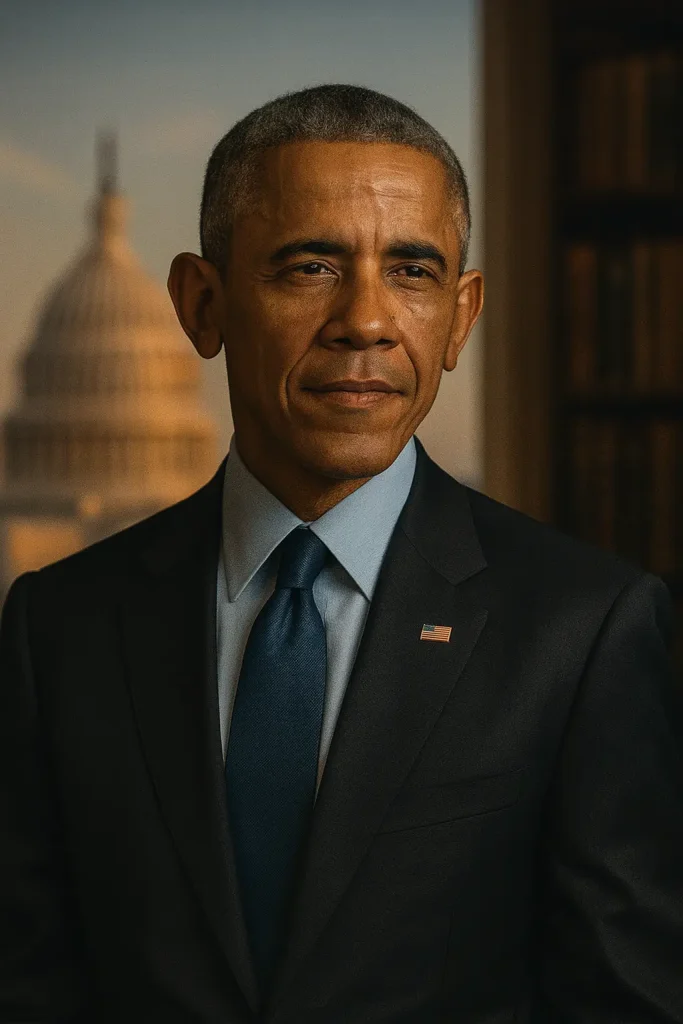
In 2008, Barack Obama won the U.S. presidential election and became the 44th President of the United States, inaugurated on January 20, 2009. He was the first African American to hold that office.
During his presidency, Obama’s domestic agenda included the Affordable Care Act (Obamacare), the Lilly Ledbetter Fair Pay Act, financial reform (Dodd-Frank Act), and stimulus measures following the Great Recession.He also oversaw judicial appointments, including Sonia Sotomayor and Elena Kagan to the Supreme Court.
On the foreign policy front, Obama pursued a “reset” policy with Russia, supported diplomatic dialogues in the Middle East, and advocated the “Pivot to Asia”. He also authorized actions in Libya during the Arab Spring and negotiated the Cuba diplomatic normalization (the Cuban Thaw).In 2010, his administration responded to the Deepwater Horizon oil spill by forming a bipartisan commission and instituting a drilling moratorium.
In 2009, Obama was awarded the Nobel Peace Prize “for his extraordinary efforts to strengthen international diplomacy and cooperation between peoples.”He served two terms, leaving office on January 20, 2017
Obama’s Global Influence After Presidency
After leaving office, Obama continued his public engagement through the Obama Foundation, development of the Barack Obama Presidential Library, and social and civic initiatives.He also and his wife Michelle Obama established the production company Higher Ground, producing films and series for platforms like Netflix.Obama remains active in political campaigns, advocacy, and writing.
Milestones of Change: Major Achievements and Awards
- Nobel Peace Prize (2009) for diplomacy and international cooperation.
- Passing the Affordable Care Act, one of the signature legislative achievements of his administration.
- Appointment of two Supreme Court Justices (Sotomayor, Kagan).
- Historic first: first African American U.S. President.
- Electoral and legislative successes in both domestic reform and foreign diplomacy.
- Influential oratory and public communication—his speeches became widely quoted and were central to his public image.
Trials of Leadership: Challenges and Controversies Along the Way
- Partisan polarization: Many of Obama’s signature reforms (e.g. health care) attracted vehement opposition and were partially rolled back by subsequent administrations.
- Expectation versus delivery: Some critics argue that Obama’s ambitious rhetoric of “hope and change” outpaced the practical achievements possible in a polarized environment.
- Handling of foreign conflicts: Actions in Libya, drone warfare, and Syria have drawn scrutiny over ethics, strategy, and unintended consequences.
- Use of executive actions: Because of Congressional gridlock, Obama often resorted to executive orders—this led to debates over executive overreach.
- Legacy under shifting political winds: Later administrations challenged or undid parts of his legacy (e.g. health care, climate policies), complicating his long-term legacy evaluation.
The Man Behind the President: Personal Life, Trivia, and Quotes
Barack Obama married Michelle LaVaughn Robinson in 1992. They have two daughters, Malia Ann (born 1998) and Natasha “Sasha” (born 2001).
Trivia and lesser known facts:
- While at Harvard, Obama was the first African American president of the Harvard Law Review.
- He once worked as a lecturer in constitutional law at the University of Chicago Law School.
- His memoirs — Dreams from My Father (1995), The Audacity of Hope (2006), and A Promised Land (2020) — have been widely read and translated.
Famous Quotes:
“Change will not come if we wait for some other person or if we wait for some other time. We are the ones we’ve been waiting for.”
“We did not come to fear the future. We came here to shape it.”
These and other quotations are frequently cited in political discourse and leadership literature.
Enduring Legacy: How Barack Obama Shaped a Generation
Barack Obama’s legacy transcends the years of his presidency. His tenure is often seen as a turning point in American politics: symbolically, as a milestone in racial progress; practically, as a period of ambitious reform in healthcare, financial regulation, and climate action. He redefined expectations for how a modern president communicates—with tech, social media, and a global stage in mind.
His leadership style, rhetorical skill, and symbolic presence have influenced a generation of public figures, politicians, and activists. Even post-presidency, his institutional structures (foundation, library, media presence) continue to shape civic life and public policy.
In the evolving archive of Profilia political biographies, Barack Obama’s life story stands as one of transformation, representation, and perseverance. His path from Honolulu to the White House, and beyond, weaves a narrative of hope, challenge, and enduring public service.
References / Sources
- “Barack Obama,” Wikipedia. Wikipedia
- “Barack Obama,” Britannica. Encyclopedia Britannica