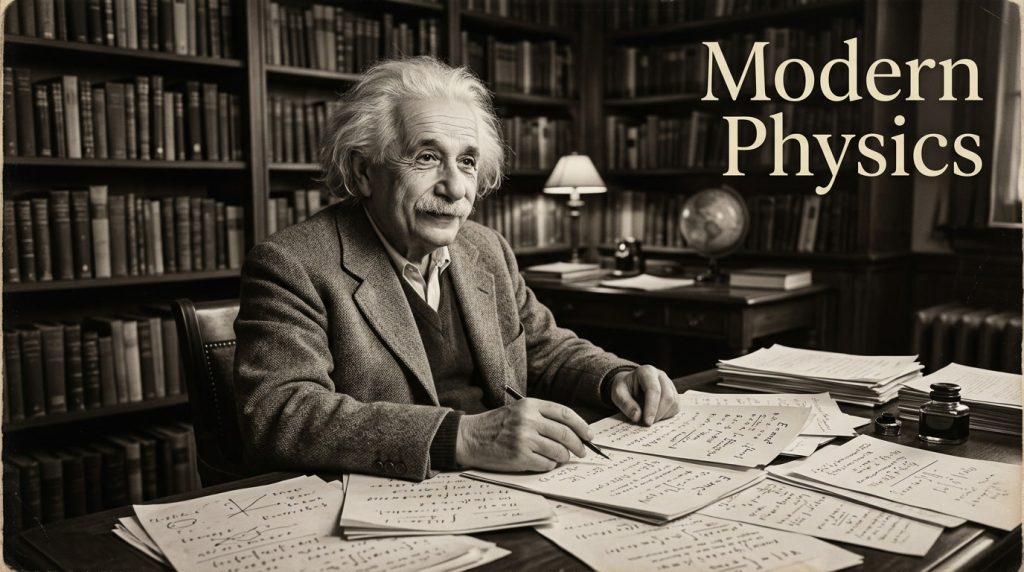
The Inspiring Life of Albert Einstein: The Man Behind Modern Physics Albert Einstein biography
Albert Einstein biography reveals a life filled with curiosity and brilliance. Born in Germany in 1879, Einstein became one of the most influential physicists in history. His theories changed our understanding of time, space, and gravity. From his early days as a student to his later achievements, his journey is a testament to the power of perseverance and intellect. This article will explore his life, his groundbreaking work, and the legacy he left behind.
Early Life and Education
Albert Einstein was born on March 14, 1879, in Ulm, Germany. He grew up in a secular Jewish family. His father, Hermann Einstein, was a salesman, while his mother, Pauline Koch, was a homemaker. As a child, Einstein showed an early interest in science and mathematics. However, he struggled in school due to his nonconformist attitude.
In 1894, the Einstein family moved to Milan, Italy. Einstein continued his education in Switzerland, where he attended the Polytechnic Institute in Zurich. He graduated in 1900. During his studies, he developed a passion for physics and mathematics. Despite facing challenges, including failing an entrance exam, he persevered. This determination marked the beginning of his journey towards becoming a renowned scientist.
Groundbreaking Theories and Achievements
Einstein’s career took off when he published four groundbreaking papers in 1905. This year is often referred to as his “Annus Mirabilis,” or “Miracle Year.” One of these papers introduced the theory of special relativity. This theory fundamentally changed the understanding of space and time.
In 1915, he presented the theory of general relativity. This theory explained gravity as a curvature of spacetime caused by mass. It revolutionized physics and led to numerous advancements in the field. Einstein’s famous equation, E=mc², emerged from this theory, demonstrating the relationship between mass and energy.
Throughout his life, Einstein received numerous awards. He won the Nobel Prize in Physics in 1921 for his explanation of the photoelectric effect. His work laid the foundation for quantum mechanics, influencing generations of scientists. His theories not only advanced science but also sparked philosophical debates about the nature of reality.
Tips/Insight
Albert Einstein’s life offers several valuable insights. Firstly, curiosity is essential for discovery. He constantly questioned established norms and sought deeper understanding. Secondly, perseverance is key. Despite facing academic challenges, his determination led to significant achievements. Lastly, collaboration and communication matter. Einstein shared his ideas with others, fostering a community of innovation.
These principles can inspire anyone pursuing their passions. Embracing curiosity, staying persistent, and engaging with others can lead to breakthroughs in various fields.
Conclusion
In summary, the Albert Einstein biography showcases an extraordinary life filled with challenges and triumphs. His contributions to modern physics have left an indelible mark on science and humanity. By exploring his life, we gain insights into the importance of curiosity, determination, and collaboration. Einstein’s legacy continues to inspire scientists and thinkers worldwide, reminding us that great achievements often arise from relentless pursuit and innovative thinking.