profilora.com – Leonardo da Vinci biography is a fascinating journey through the life of one of history’s greatest minds. Born in 1452, da Vinci was not only an artist but also a scientist, inventor, and thinker. His diverse talents and insatiable curiosity set him apart during the Renaissance. In this article, we will explore his early life, contributions, and lasting legacy. Each aspect of his existence reveals the depth of his genius and how it transcends time.
Early Life and Education
Leonardo di ser Piero da Vinci was born on April 15, 1452, in Vinci, Italy. He was the illegitimate son of a notary and a peasant woman. Despite his humble beginnings, his father recognized his talent early on. Consequently, he apprenticed him to Andrea del Verrocchio, a prominent artist in Florence. Here, da Vinci learned painting, sculpture, and mechanics, laying the foundation for his future achievements.
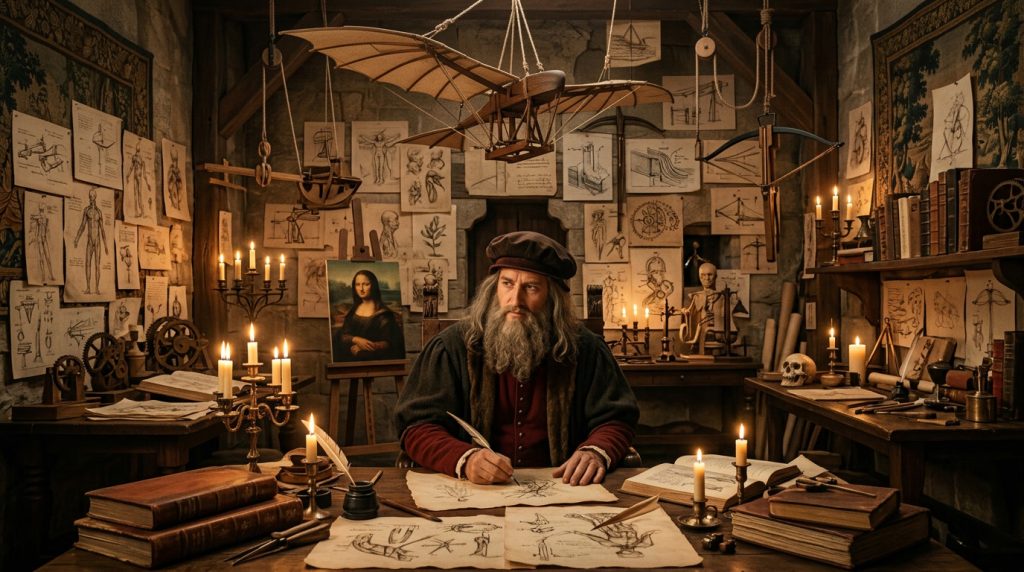
– As he matured, da Vinci’s interests expanded beyond art. He began to study anatomy, physics, and engineering. His keen observation skills allowed him to make discoveries that were ahead of his time. This period was crucial in shaping his innovative spirit, blending art with science. His notebooks from this time reveal a mind constantly in search of knowledge.
Artistic Masterpieces
Leonardo da Vinci biography is often synonymous with his iconic artworks. Among these, the “Mona Lisa” and “The Last Supper” stand out. The “Mona Lisa,” painted between 1503 and 1506, captivates viewers with her enigmatic smile. This piece exemplifies da Vinci’s mastery of sfumato, a technique that creates a soft transition between colors and tones.
The “Last Supper,” created between 1495 and 1498, depicts a pivotal moment in Christian theology. Here, da Vinci masterfully captures the emotions of the apostles as they react to Jesus’s announcement. Both works showcase his unique ability to convey human emotion and narrative through visual art. Da Vinci’s innovative techniques set new standards for painting, influencing countless artists in subsequent generations.
Tips/Insight
To appreciate Leonardo da Vinci’s genius, consider these insights. First, explore his notebooks, filled with sketches and ideas. They reveal his relentless pursuit of understanding. Second, examine how his art reflects his scientific knowledge. For instance, his anatomical drawings demonstrate his study of the human body. Lastly, recognize that his influence extends beyond art. His inventions, such as flying machines, highlight his visionary thinking. By understanding these aspects, one can gain deeper insights into the legacy of his work.
Conclusion
In conclusion, the Leonardo da Vinci biography showcases a remarkable individual whose contributions transcend time. His works, both artistic and scientific, continue to inspire and challenge us. By studying his life, we can appreciate the brilliance of a true Renaissance man. Leonardo da Vinci’s legacy reminds us of the power of curiosity and creativity in shaping our world.