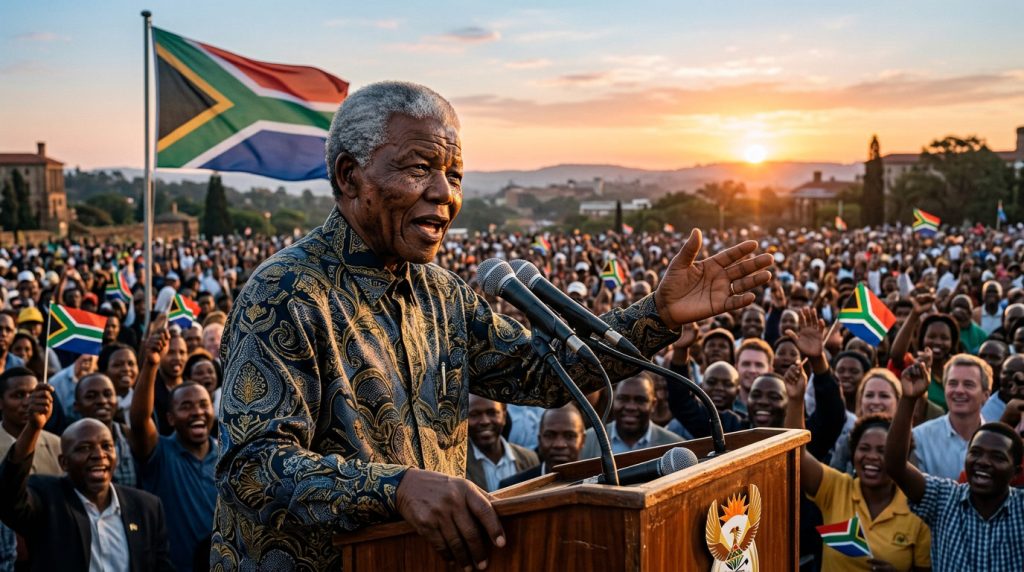
profilora.com – Nelson Mandela biography reveals the extraordinary life of a leader who transformed South Africa. Born on July 18, 1918, in Mvezo, Mandela became a symbol of resistance against apartheid. His journey from a rural village to the presidency is nothing short of inspiring. Mandela’s dedication to equality and justice helped unite a divided nation. Throughout his life, he faced immense challenges but remained steadfast in his beliefs. This article explores significant milestones in his life, his contributions to South Africa, and the legacy he left behind.
Early Life and Education
Nelson Mandela was born into the Thembu royal family. He grew up in a traditional African society in the Eastern Cape. His early education took place in local schools, where he excelled academically. In 1939, he enrolled at the University of Fort Hare. Unfortunately, he was expelled for participating in a student protest. However, this did not deter him. Mandela continued his studies through the University of South Africa and graduated in 1942. –
During these formative years, he became increasingly aware of the racial injustices in South Africa. He joined the African National Congress (ANC) in 1944. This marked the beginning of his lifelong commitment to fighting for equality. Mandela’s early experiences profoundly shaped his views on justice and freedom. He understood that education was crucial for empowerment. Therefore, he dedicated his life to advocating for the rights of his people.
Struggle Against Apartheid
In the 1950s, Mandela emerged as a prominent leader in the struggle against apartheid. He organized protests and campaigns to challenge the oppressive regime. In 1961, he co-founded the Umkhonto we Sizwe, the armed wing of the ANC. This decision marked a significant turn in his approach to activism. Mandela believed that armed resistance was necessary to combat systemic violence.
In 1962, Mandela was arrested and sentenced to life imprisonment for his opposition to apartheid. He spent 27 years in prison, primarily on Robben Island. During this time, he became a global symbol of resistance. Support for Mandela grew worldwide, leading to international campaigns for his release. His imprisonment highlighted the brutality of the apartheid regime. In 1990, he was finally released, and the world celebrated his freedom.
Tips/Insight
To truly understand the impact of Nelson Mandela, one must recognize his resilience. He faced significant challenges but never wavered in his commitment to justice. His ability to forgive and unite people is a crucial lesson for modern leaders. Mandela showed that dialogue and understanding are powerful tools in conflict resolution. Additionally, his dedication to education is a reminder of its importance in fostering change. By sharing his story, we can inspire future generations to continue the fight for equality.
Legacy and Influence
Nelson Mandela’s legacy extends far beyond South Africa. He became the nation’s first black president in 1994 after the first democratic elections. His leadership focused on reconciliation and nation-building. Mandela emphasized the importance of forgiveness, encouraging South Africans to move past their painful history. His efforts helped to heal a divided nation. Moreover, he established the Nelson Mandela Foundation, promoting human rights and social justice globally.
Mandela’s influence is evident in various movements worldwide. He inspired leaders and activists to advocate for change. His life serves as a powerful reminder of the importance of courage and perseverance. The Nelson Mandela biography teaches us that true leadership involves serving others. His commitment to equality and justice continues to resonate today. As we reflect on his life, we are reminded of the ongoing struggle for human rights.
Conclusion
In summary, Nelson Mandela biography encapsulates the life of a remarkable leader. His journey from humble beginnings to the presidency is inspiring. Mandela’s dedication to justice and equality helped unite a nation. His legacy continues to inspire people worldwide in their fight for freedom. By understanding his life, we can learn valuable lessons about resilience and forgiveness.