From a Curious Boy in Seattle to the Dawn of a Digital Dream
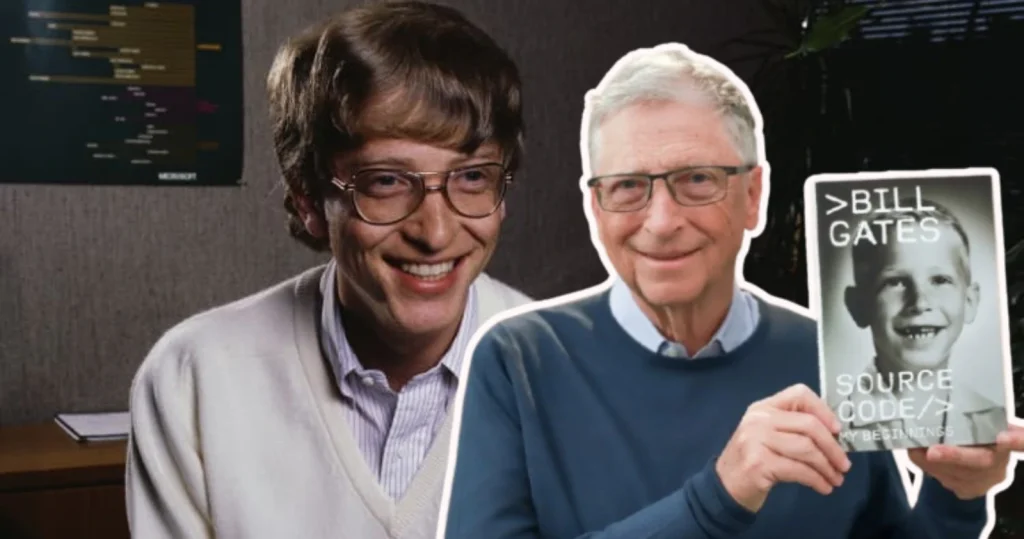
William Henry Gates III was born on October 28, 1955, in Seattle, Washington. The son of a prominent attorney and a civic-minded mother, Bill grew up in a household where intellect and service were both prized. His father, Bill Gates Sr., taught him the power of structure and discipline, while his mother, Mary Maxwell Gates, modeled leadership through philanthropy and education.
As a boy, Gates wasn’t just bright — he was insatiably curious. He devoured encyclopedias for fun and turned everyday puzzles into intellectual challenges. Yet, it was at Lakeside School, a small private institution in Seattle, that his destiny began to take form. When the school’s Mothers’ Club purchased a computer terminal, young Bill’s life shifted course. Hours turned into nights as he and a small circle of friends — Paul Allen, Kent Evans, and Rick Weiland — explored what was then a mysterious new machine.
While most teenagers played ball or listened to rock music, Bill was learning to speak the language of the future: code. He was just thirteen, but already thinking beyond assignments, dreaming of programs that could change how humans interacted with machines. The first “spark” was lit — not by fame or ambition, but by fascination.
The Rise of a Relentless Visionary
At Lakeside, Gates and Allen shared a bond that would one day alter the digital landscape. They experimented with the General Electric mainframe, later writing basic programs like Tic-Tac-Toe. What started as a school hobby soon grew into real-world problem solving.
In high school, Gates landed an early contract to write payroll software for a local company — a job usually reserved for seasoned engineers. His natural aptitude and persistence quickly earned him respect in an adult world. The experience would become a prototype for his later philosophy: tackle big problems early, learn fast, and iterate relentlessly.
When Gates entered Harvard University in 1973, his path seemed destined for academia. But destiny had other plans. Reuniting with Paul Allen, who kept him informed on microprocessor advances, the two saw something revolutionary in the newly released Altair 8800. They coded a version of BASIC for it — the first software that made the personal computer truly usable.
In 1975, the friends co-founded Microsoft, a name that combined “microcomputer” and “software.” What began in a small Albuquerque office with twenty employees would grow into a global empire. Bill’s goal sounded outrageous at the time: “A computer on every desk and in every home.” Today, that sentence reads like prophecy fulfilled.
The Turning Point: From Start-up Chaos to Global Revolution
Through the late 1970s and 1980s, Gates’s intensity was legendary. He was known to sleep on the office floor, review every line of code himself, and argue with employees deep into the night. Yet this perfectionism fueled one of the most important technological shifts in human history.
Microsoft’s partnership with IBM to create an operating system — MS-DOS — marked the dawn of personal computing. By the time Windows launched in 1985, Gates had set in motion a new era: the interface-driven computer that ordinary people could use.
His sharp intellect often masked a quietly human side. Those who worked with him recall his laugh — half-mischievous, half-boyish — breaking the tension in long strategy sessions. Beneath the intensity was curiosity: he didn’t just want to win; he wanted to understand.
By the mid-1990s, Gates became the world’s richest man, and Microsoft’s software powered nearly every computer on Earth. But success brought its trials. The company faced antitrust lawsuits, accusations of monopoly power, and the growing scrutiny of the press. Gates weathered it with a mix of defensiveness and humor, learning that leadership at scale required not only brilliance but humility.
When Power Meets Purpose
As the new millennium approached, Bill Gates stood at a crossroads. Having built a company that defined the digital age, he began to question what all that success was for. His mother’s civic spirit and his father’s sense of justice whispered in his mind: use what you’ve built to serve others.
In 2000, alongside his then-wife Melinda, he founded the Bill & Melinda Gates Foundation — now one of the most influential philanthropic organizations in the world. Its mission: to improve global health, reduce poverty, and expand access to education and technology.
Gates applied his engineer’s mindset to humanitarian problems, funding vaccine research, malaria eradication, and sanitation projects in developing countries. “I love what I do now,” he said years later, “because I still get to back innovations — only this time, they save lives instead of data.”
Where once he optimized code, now he optimized compassion. His success became a resource for solving some of the planet’s hardest equations: disease, inequality, and access to opportunity.
The Human Behind the Genius
Despite the mythic aura surrounding his name, Bill Gates remains deeply human. Friends describe him as endlessly curious — someone who devours books on climate science, philosophy, and history. He still enjoys the challenge of explaining complex ideas in simple ways.
The transcripts of his recent interviews reveal a reflective man who acknowledges his flaws with candor. He admits he once lacked emotional awareness, that he might have been diagnosed on the autism spectrum today — and that what once made him “different” is what made him brilliant.
He credits his parents for grounding him, his children for reshaping his sense of empathy, and his longtime friend Paul Allen for opening the door to everything. The passing of Allen in 2018 was deeply personal; their bond, built on shared wonder, was the foundation of Microsoft’s story.
Even in private moments, Gates remains driven not by wealth but by curiosity. Whether discussing malaria vaccines or artificial intelligence, his energy is that of a man still chasing the next breakthrough.
A Legacy Beyond Silicon and Software
Bill Gates’s impact cannot be measured in dollars or patents. His true legacy is how he redefined possibility. He helped democratize computing, then turned around and tried to democratize health, education, and climate solutions.
Through the Gates Foundation, billions have been invested in combating infectious diseases, supporting women’s empowerment, and expanding clean energy initiatives. He once dreamed of “free computing” — now he dreams of “a healthier, fairer world.”
Today, as he turns his focus to climate innovation and global development, Gates embodies a rare continuity: the same logical rigor that made him a software pioneer now drives his humanitarian vision. The boy who once broke curfew to code has become a man trying to reprogram the future.
From the blinking lights of a General Electric terminal at Lakeside to the boardrooms of global health initiatives, Bill Gates has lived two full careers — both defined by the same principle: relentless curiosity in service of progress.
His story is not one of genius alone, but of transformation — proof that when knowledge meets purpose, the world itself can be rewritten.